

In the realm of modern agriculture and industrial storage, smart metering silos have emerged as a revolutionary solution, offering real - time monitoring and data collection capabilities. One of the crucial aspects that users often inquire about is whether smart metering silos support historical data retrieval. As a leading supplier of smart metering silos, I am here to delve into this topic in detail.
The Significance of Historical Data Retrieval
Historical data retrieval is not just a fancy feature; it is a fundamental requirement for efficient silo management. In the context of smart metering silos, historical data can provide valuable insights into various aspects such as inventory levels, temperature fluctuations, humidity changes, and usage patterns over time.
For instance, by analyzing historical temperature data, farmers or industrial operators can identify seasonal trends in temperature variations within the silo. This information is crucial for preventing spoilage of stored products, as certain grains or industrial materials are highly sensitive to temperature changes. If the historical data shows that the temperature inside the silo tends to rise during a particular season, operators can take proactive measures such as increasing ventilation or adjusting insulation.
Inventory management is another area where historical data retrieval plays a vital role. By tracking the historical inflow and outflow of materials in the silo, operators can accurately predict future demand, plan for restocking, and avoid over - or under - stocking situations. This not only helps in optimizing the use of storage space but also reduces costs associated with excess inventory or stockouts.
How Smart Metering Silos Enable Historical Data Retrieval
Our smart metering silos are equipped with advanced sensors and data logging systems that continuously collect and store data. These sensors are designed to measure a wide range of parameters, including but not limited to temperature, humidity, pressure, and level of the stored material. The data is then transmitted to a central database, either through wired or wireless communication protocols.
The central database serves as a repository for all the historical data collected from the silo. It is designed to handle large volumes of data and ensure its integrity and security. Users can access this historical data through a user - friendly interface, which can be a web - based platform or a mobile application. The interface allows users to query the database, filter data based on specific criteria such as date, time, and parameter, and generate reports and visualizations.
For example, a user can generate a line graph showing the temperature variation inside the silo over the past month. This visualization makes it easy to identify patterns and anomalies in the data. Additionally, the interface also supports data export in various formats such as CSV or Excel, which can be further analyzed using external tools.
Types of Smart Metering Silos and Their Historical Data Retrieval Capabilities
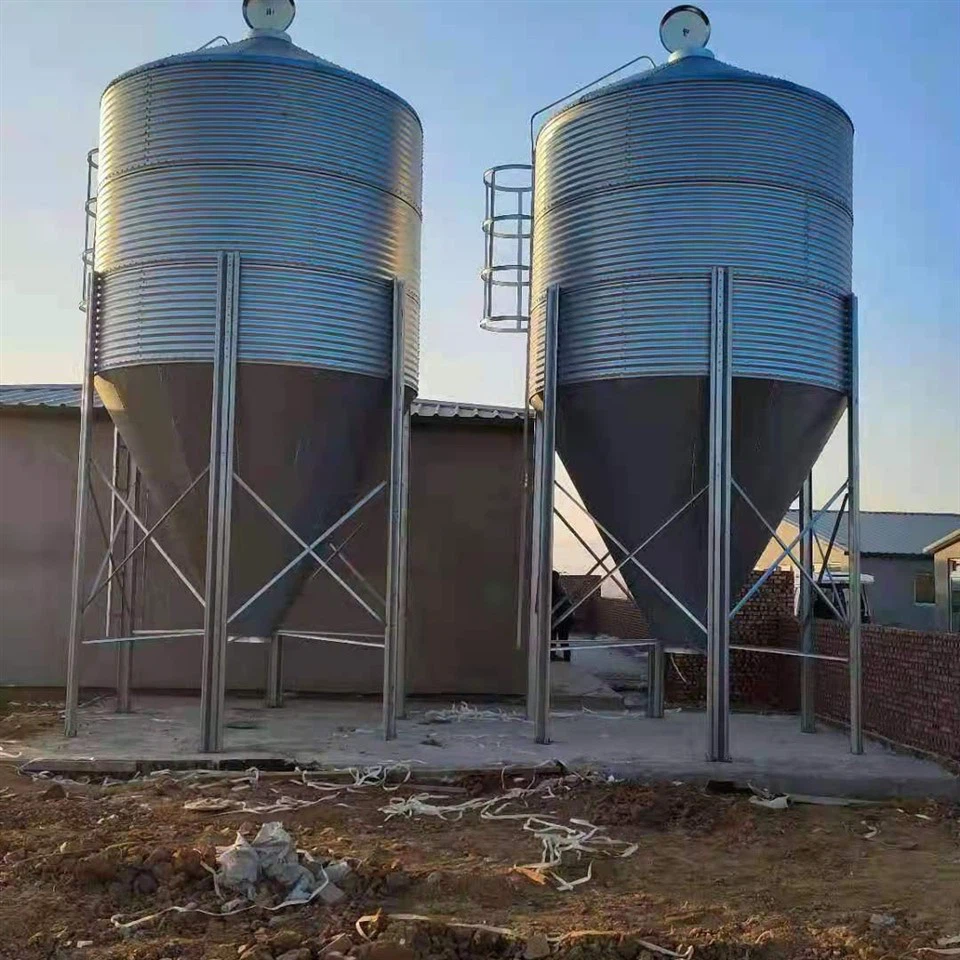
We offer a diverse range of smart metering silos to meet the different needs of our customers. Each type of silo is designed with specific features and capabilities, including historical data retrieval.
Moisture - proof Silos
Our Moisture - proof Silos are specifically designed to protect stored materials from moisture damage. These silos are equipped with humidity sensors that continuously monitor the moisture levels inside the silo. The historical data retrieved from these sensors can help operators understand the moisture trends over time and take appropriate measures to maintain optimal humidity levels. For example, if the historical data shows a gradual increase in humidity, operators can increase the frequency of ventilation or use desiccants to reduce moisture.
15 - 33T Medium Silos
The 15 - 33T Medium Silos are ideal for small to medium - scale operations. These silos are equipped with level sensors that accurately measure the amount of material stored in the silo. The historical data from these sensors can be used to analyze the consumption rate of the material, plan for refilling, and optimize the use of the silo's capacity. For instance, if the historical data shows that the material is being consumed at a faster rate during a particular period, operators can adjust their procurement schedule accordingly.
80 - 100T Storage Silos
Our 80 - 100T Storage Silos are designed for large - scale storage requirements. These silos are equipped with multiple sensors to monitor various parameters such as temperature, pressure, and level. The historical data retrieved from these sensors provides a comprehensive overview of the silo's performance over time. Operators can use this data to identify potential issues, optimize the operation of the silo, and ensure the safety and quality of the stored materials.
Challenges in Historical Data Retrieval and How We Overcome Them
While historical data retrieval from smart metering silos offers numerous benefits, there are also some challenges that need to be addressed. One of the main challenges is data security. Since the historical data contains sensitive information about the silo's operation and the stored materials, it is essential to ensure its protection from unauthorized access, modification, or deletion.
To overcome this challenge, we implement strict security measures such as encryption, access control, and regular data backups. The data transmitted from the sensors to the central database is encrypted using industry - standard encryption algorithms, ensuring that it cannot be intercepted or tampered with during transmission. Access to the database is restricted to authorized personnel only, and user accounts are protected with strong passwords and multi - factor authentication.
Another challenge is data management. As the amount of historical data collected from the silo increases over time, it becomes essential to manage and organize the data effectively. This includes tasks such as data cleaning, data aggregation, and data archiving.
We use advanced data management techniques to address these challenges. Our data management system automatically cleans the data by removing any outliers or errors. It also aggregates the data at different time intervals, such as hourly, daily, or monthly, to make it easier to analyze. Additionally, old data is archived to free up storage space while still ensuring its availability for future reference.
Conclusion
In conclusion, smart metering silos do support historical data retrieval, and this feature offers significant benefits for silo management. Our smart metering silos, including Moisture - proof Silos, 15 - 33T Medium Silos, and 80 - 100T Storage Silos, are designed to provide accurate and reliable historical data that can be used to optimize operations, improve inventory management, and ensure the quality of stored materials.
If you are interested in learning more about our smart metering silos and how they can support your historical data retrieval needs, we encourage you to contact us for a detailed discussion. Our team of experts is ready to assist you in choosing the right silo solution for your specific requirements and guiding you through the procurement process.

References
- "Smart Sensor Technologies for Agricultural Applications", Journal of Agricultural Engineering
- "Data Management in Industrial Internet of Things: Challenges and Solutions", IEEE Transactions on Industrial Informatics