

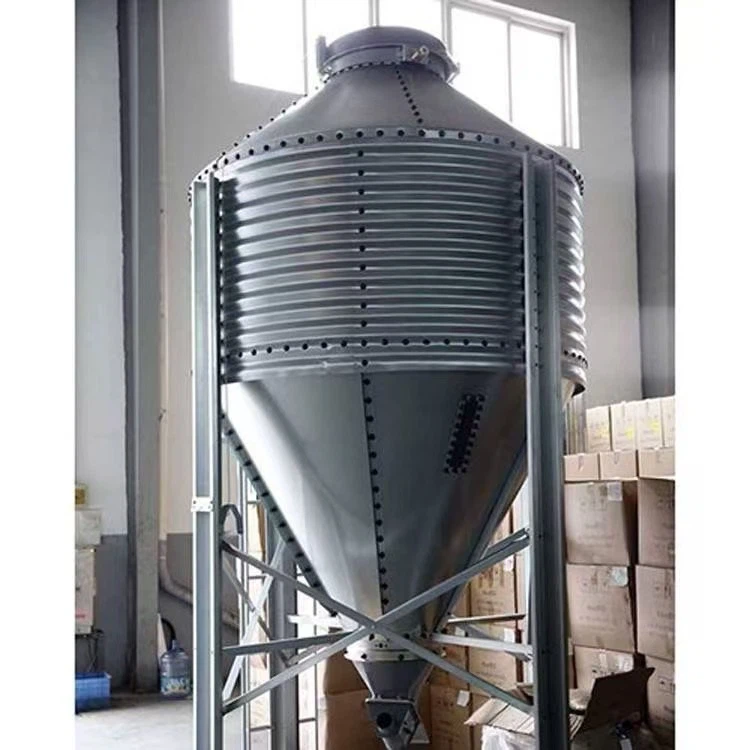
Anti-static measures are of paramount importance when it comes to mixing-equipped silos. As a prominent supplier of Mixing-equipped Silos, I understand the significance of these measures not only for the safety of operations but also for the longevity and efficiency of the silos. In this blog, I will delve into the various anti-static measures that can be implemented to ensure a safe and smooth operation environment.
Understanding the Risk of Static Electricity in Mixing - Equipped Silos
Static electricity is generated when two materials come into contact and then separate. In the context of mixing - equipped silos, the movement of powders, granules, or liquids during the mixing process can cause friction, leading to the build - up of static charges. These static charges can pose several risks. Firstly, they can attract dust particles, which may accumulate on the silo walls and equipment. This dust accumulation not only affects the cleanliness of the silo but can also lead to blockages in pipes and valves. Secondly, and more seriously, a high - energy static discharge can ignite combustible dust or vapors in the silo, resulting in explosions or fires.
Grounding Systems
One of the most fundamental anti - static measures is the installation of a proper grounding system. Grounding provides a path for the static charges to flow safely into the ground, preventing the build - up of excessive charges. For our Mixing - equipped Silos, we ensure that all metal components, including the silo body, mixing equipment, and any attached pipes or valves, are electrically connected to a reliable grounding electrode. This grounding electrode should be buried deep enough in the soil to provide a low - resistance path to the earth.
Regular inspections of the grounding system are also crucial. Over time, the grounding connections may become loose or corroded, which can reduce the effectiveness of the grounding. We recommend that our customers conduct visual inspections of the grounding wires and connections at least once a month and perform electrical resistance tests annually.
Anti - Static Coatings
Applying anti - static coatings to the interior surfaces of the silo is another effective measure. These coatings are designed to reduce the generation of static charges by providing a conductive path for the charges to dissipate. Anti - static coatings can also prevent dust from adhering to the silo walls, making it easier to clean the silo.
There are different types of anti - static coatings available, such as conductive polymers and metal - filled coatings. When selecting an anti - static coating for our Mixing - equipped Silos, we consider factors such as the type of materials stored in the silo, the operating temperature, and the chemical compatibility of the coating with the stored materials.
Static Eliminators
Static eliminators are devices that neutralize static charges by generating ions. They can be installed inside the silo or near the mixing equipment to reduce the static charge levels. There are two main types of static eliminators: passive and active.

Passive static eliminators, such as static brushes, work by using conductive fibers to dissipate static charges. They are simple and cost - effective, but their effectiveness may be limited in high - speed or high - charge environments. Active static eliminators, on the other hand, use a power source to generate ions. They can provide more consistent and efficient static charge neutralization.
Humidity Control
Maintaining an appropriate level of humidity in the silo environment can also help reduce static electricity. Higher humidity levels increase the conductivity of the air, allowing static charges to dissipate more easily. In dry conditions, the air is a poor conductor, and static charges are more likely to build up.
We recommend that our customers use humidifiers in the silo area to maintain a relative humidity level between 40% and 60%. However, it is important to note that excessive humidity can also cause problems, such as corrosion of the silo components and spoilage of the stored materials. Therefore, humidity levels should be carefully monitored and controlled.
Safe Operating Procedures
In addition to the technical anti - static measures, implementing safe operating procedures is essential. For example, operators should avoid sudden movements or rapid filling and emptying of the silo, as these actions can generate more static electricity. They should also wear anti - static clothing and shoes to prevent the transfer of static charges from their bodies to the silo.
Moreover, regular cleaning of the silo and the mixing equipment is necessary to remove any accumulated dust. Dust can act as an insulator, which can increase the risk of static charge build - up. We provide detailed cleaning instructions to our customers, including the recommended cleaning agents and frequencies.
Our Product Range and Anti - Static Features
As a Mixing - equipped Silos supplier, we offer a wide range of products to meet different customer needs. Our Smart Metering Silos are equipped with advanced sensors and control systems. These silos are designed with anti - static features, such as proper grounding and anti - static coatings, to ensure safe and accurate metering operations.
For customers with smaller storage requirements, our 3 - 10T Small Silos are a great choice. These silos are compact and easy to install, and they also incorporate anti - static measures to protect the stored materials and the equipment.
If you need large - scale storage solutions, our 200 - 400T Steel Bins are built to last. They are made of high - quality steel and are designed with comprehensive anti - static protection, including grounding systems, static eliminators, and anti - static coatings.
Conclusion
In conclusion, anti - static measures are essential for the safe and efficient operation of Mixing - equipped Silos. By implementing grounding systems, anti - static coatings, static eliminators, humidity control, and safe operating procedures, the risk of static - related accidents can be significantly reduced.
As a leading supplier of Mixing - equipped Silos, we are committed to providing our customers with high - quality products and comprehensive anti - static solutions. If you are interested in purchasing our Mixing - equipped Silos or need more information about our anti - static measures, please feel free to contact us for a detailed consultation and procurement negotiation.
References
- "Static Electricity in Industrial Processes: Principles and Applications" by Neil A. Cross
- "Safety Guidelines for Combustible Dust in Industrial Settings" by the Occupational Safety and Health Administration (OSHA)