

When it comes to designing a silo foundation, there are numerous factors that need to be carefully considered. As a silo supplier, I have witnessed firsthand the importance of a well - designed foundation for the long - term stability and functionality of silos. In this blog, I will delve into the key factors that should be taken into account during the silo foundation design process.
Soil Conditions
One of the most critical factors in silo foundation design is the soil conditions at the construction site. The type of soil, its bearing capacity, and its settlement characteristics can significantly impact the performance of the silo.

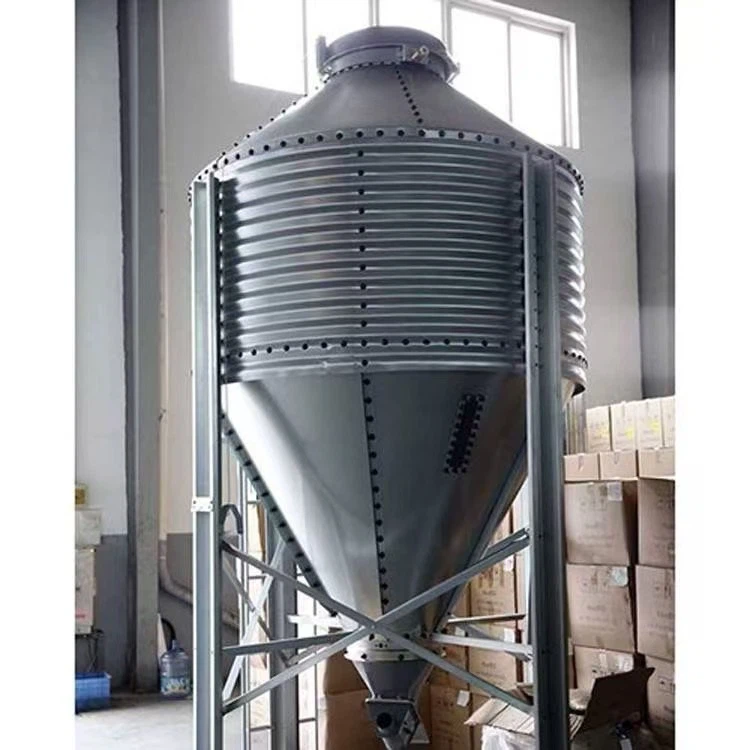
There are various types of soil, such as clay, sand, silt, and gravel. Each type has different properties. For instance, clay soils are known for their high compressibility. When a silo is built on clay soil, it may experience significant settlement over time. This settlement can cause structural damage to the silo, such as cracking of the walls or misalignment of the silo components. On the other hand, sandy soils generally have better drainage and lower compressibility compared to clay soils. However, they may have lower bearing capacity in some cases, especially if the sand is loose.
To accurately assess the soil conditions, a geotechnical investigation is essential. This investigation typically involves drilling boreholes at the site to collect soil samples at different depths. Laboratory tests are then conducted on these samples to determine properties such as the soil's shear strength, density, and moisture content. Based on the results of the geotechnical investigation, engineers can design a foundation that is suitable for the specific soil conditions. For example, if the soil has a low bearing capacity, a deep foundation system such as piles may be required to transfer the silo's load to a more competent soil layer deeper underground.
Silo Size and Capacity
The size and capacity of the silo also play a crucial role in foundation design. Larger silos with higher capacities will exert greater loads on the foundation. For example, our 80 - 100T Storage Silos will have a much heavier load compared to our 3 - 10T Small Silos.
When designing the foundation for a large - capacity silo, the foundation must be able to support the weight of the silo itself, as well as the weight of the stored material. The distribution of the load also needs to be considered. In some cases, the load may be concentrated at certain points, such as the legs of a supported silo. This requires a foundation design that can effectively distribute the load to prevent excessive stress on the soil.
The height - to - diameter ratio of the silo is another aspect related to size. Taller silos may be more susceptible to wind - induced vibrations and lateral forces. The foundation design needs to account for these additional forces to ensure the stability of the silo.
Load Types
In addition to the static load from the weight of the silo and its contents, other load types must be considered during foundation design.
Wind Load: Wind can exert significant lateral forces on a silo, especially in areas with high - wind speeds. The shape and height of the silo affect the wind load it experiences. A cylindrical silo may have different wind - loading characteristics compared to a rectangular one. Engineers use wind - load standards and codes to calculate the wind forces acting on the silo. The foundation must be designed to resist these lateral forces to prevent the silo from toppling over.
Seismic Load: In seismic - prone areas, the foundation must be designed to withstand earthquake - induced forces. Earthquakes can cause ground shaking, which can lead to dynamic loads on the silo. The soil - structure interaction during an earthquake is complex. The foundation design should take into account the seismicity of the area, such as the magnitude and frequency of potential earthquakes. Reinforced concrete foundations or other seismic - resistant foundation systems may be required in these regions.
Thermal Load: Temperature changes can cause the silo and its foundation to expand and contract. If the foundation is not designed to accommodate these thermal movements, it can lead to cracking and other structural problems. For example, in regions with large temperature variations between day and night or between seasons, the foundation should be designed with appropriate expansion joints or flexible materials to allow for thermal expansion and contraction.
Environmental Factors
The environmental conditions at the construction site can also impact the silo foundation design.
Moisture and Water Table: High water tables can cause problems for silo foundations. If the foundation is in contact with water for an extended period, it can lead to corrosion of the reinforcement in concrete foundations or softening of the soil. Waterproofing measures may be required to protect the foundation from water damage. Additionally, changes in the water table level over time, such as due to seasonal rainfall or nearby water sources, need to be considered.
Chemical Exposure: In some industrial settings, the silo may be exposed to chemicals. These chemicals can react with the foundation materials, causing deterioration. For example, acidic or alkaline substances can corrode concrete or metal components of the foundation. The foundation design should incorporate appropriate protective coatings or use chemical - resistant materials to prevent chemical damage.
Construction Constraints
The construction process itself can impose constraints on the foundation design.
Site Access: Limited site access can affect the type of foundation that can be constructed. For example, if heavy construction equipment cannot easily reach the site, a deep foundation system that requires large - scale drilling and piling may not be feasible. In such cases, a shallow foundation system may be a more practical option.
Time Constraints: If there are tight construction schedules, the foundation design should allow for a relatively quick construction process. Some foundation systems, such as pre - cast concrete foundations, can be installed more rapidly compared to in - situ cast concrete foundations.
Maintenance and Inspection
A well - designed silo foundation should also facilitate maintenance and inspection. Access points should be provided to allow for regular inspection of the foundation for signs of damage, settlement, or corrosion. The foundation design should also consider future maintenance requirements, such as the ability to repair or replace components if necessary.
Conclusion
Designing a silo foundation is a complex process that requires careful consideration of multiple factors. Soil conditions, silo size and capacity, load types, environmental factors, construction constraints, and maintenance requirements all play important roles in ensuring the stability and functionality of the silo. As a silo supplier, we understand the significance of these factors and work closely with engineers and contractors to provide the best - suited silo solutions for our customers.
If you are in the market for a silo, whether it's our 3 - 10T Small Silos, 40 - 60T Large Silos, or 80 - 100T Storage Silos, we are here to assist you. Contact us to discuss your specific requirements and start the procurement process. We look forward to working with you to design and install a silo with a reliable foundation that meets your needs.
References
- Bowles, J. E. (1996). Foundation Analysis and Design (5th ed.). McGraw - Hill.
- Coduto, D. P., Kitch, J. R., & Stuedlein, A. M. (2017). Foundation Design: Principles and Practices (4th ed.). Pearson.
- ASCE 7 - 16. (2016). Minimum Design Loads and Associated Criteria for Buildings and Other Structures. American Society of Civil Engineers.