

In industrial systems, the efficient flow of materials is crucial for maintaining smooth operations. However, systems with variable flow rates often encounter blockages, which can disrupt production and lead to significant losses. As a leading supplier of anti - blocking dischargers, I am well - versed in how these devices work to ensure continuous and unobstructed material flow.
Understanding Variable Flow Rate Systems
Variable flow rate systems are designed to handle different amounts of materials at different times. These systems can be found in various industries, such as food processing, pharmaceuticals, and bulk material handling. For example, in a food processing plant, the flow rate of ingredients may vary depending on the production recipe and the batch size. In a pharmaceutical factory, the flow of powders can change according to the dosage requirements of different medications.
The main challenge in variable flow rate systems is that the inconsistent flow can cause materials to accumulate and form blockages. High flow rates may lead to over - packing of materials, while low flow rates can result in slow - moving or stagnant material, both of which are conducive to blockage formation.
The Function of Anti - Blocking Dischargers
Anti - blocking dischargers are specifically designed to prevent and eliminate blockages in systems with variable flow rates. They work through several mechanisms, which are tailored to the characteristics of different materials and system requirements.
Mechanical Agitation
One of the most common ways anti - blocking dischargers work is through mechanical agitation. These devices are equipped with rotating blades, paddles, or screws that stir the material inside the storage or conveying equipment. When the flow rate changes, the agitator can break up any clumps or bridges that may form.
For instance, in a silo where granular materials are stored, a rotating paddle - type anti - blocking discharger can continuously move the material near the outlet. This movement prevents the particles from settling and forming a stable bridge that would block the flow. As the flow rate increases or decreases, the speed of the agitator can be adjusted accordingly to maintain an optimal flow.
Pneumatic Assistance
Pneumatic anti - blocking dischargers use compressed air to clear blockages. When a blockage is detected, a burst of high - pressure air is released into the system. This sudden increase in pressure can dislodge the accumulated material and restore the flow.
In a Pneumatic Conveying Systems, for example, if the flow rate drops due to a blockage, the pneumatic anti - blocking discharger can inject air at strategic points along the pipeline. The air creates a turbulent flow that breaks up the blockage and pushes the material forward. The system can be set to activate the pneumatic assistance automatically when the pressure or flow rate deviates from the normal range.
Vibratory Action
Vibratory anti - blocking dischargers rely on vibrations to prevent blockages. By generating vibrations, these devices can reduce the friction between the material and the walls of the container or pipeline. This allows the material to flow more freely, even when the flow rate is variable.
In a hopper, a vibratory anti - blocking discharger can be attached to the outside wall. As the material starts to accumulate and slow down the flow, the vibrator can be activated. The vibrations are transmitted through the hopper wall to the material, causing it to loosen and resume flowing. The intensity and frequency of the vibrations can be adjusted based on the properties of the material and the flow rate requirements.
Integration with Automated Control Systems
To work effectively in systems with variable flow rates, anti - blocking dischargers are often integrated with Automated Control Systems. These control systems use sensors to monitor the flow rate, pressure, and level of the material in the system.
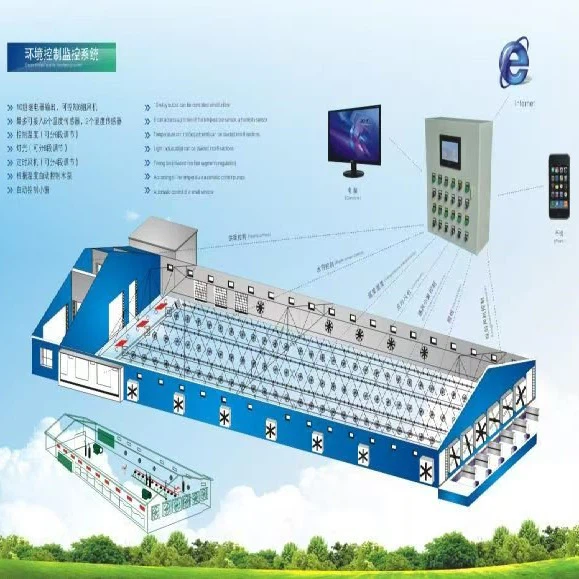

Based on the data collected by the sensors, the control system can adjust the operation of the anti - blocking discharger. For example, if the flow rate drops below a certain threshold, the control system can increase the speed of the mechanical agitator or trigger the pneumatic assistance. Conversely, when the flow rate is normal, the system can reduce the energy consumption of the anti - blocking discharger by lowering the agitation speed or reducing the frequency of pneumatic bursts.
Compatibility with Different Conveying Systems
Anti - blocking dischargers are compatible with a wide range of conveying systems, including Chain Conveying Systems and pneumatic conveying systems.
In chain conveying systems, anti - blocking dischargers can be installed at key points along the chain path, such as at the inlet and outlet of the conveyor. They can prevent blockages caused by material build - up on the chain or at the transfer points. In pneumatic conveying systems, as mentioned earlier, pneumatic anti - blocking dischargers play a vital role in maintaining a smooth flow of materials through the pipelines.
Benefits of Using Anti - Blocking Dischargers
The use of anti - blocking dischargers in systems with variable flow rates offers several benefits. Firstly, it improves the reliability of the production process. By preventing blockages, the system can operate continuously without unexpected downtime, which is essential for meeting production targets.
Secondly, it enhances the quality of the final product. In industries where the consistency of material flow is critical, such as in the production of pharmaceuticals or high - precision electronic components, anti - blocking dischargers ensure that the materials are delivered in a uniform manner. This leads to a more consistent product quality.
Finally, it reduces maintenance costs. Since blockages can cause damage to the equipment, the use of anti - blocking dischargers can extend the lifespan of the storage and conveying systems. Fewer blockages mean less frequent cleaning and repair work, resulting in lower maintenance expenses.
Contact for Procurement
If you are facing blockage problems in your systems with variable flow rates, our anti - blocking dischargers can provide an effective solution. As a professional supplier, we have a wide range of products to meet different industry needs. Our team of experts can also offer customized solutions based on your specific requirements.
We invite you to contact us for more information about our anti - blocking dischargers and to discuss your procurement needs. Let us work together to ensure the smooth operation of your industrial systems.
References
- "Industrial Material Handling Handbook" - A comprehensive guide on material handling systems and the challenges associated with variable flow rates.
- "Pneumatic Conveying Technology" - This book provides in - depth knowledge about pneumatic conveying systems and the role of anti - blocking devices.
- "Mechanical Agitation in Industrial Processes" - Explains the principles and applications of mechanical agitation in preventing blockages in various industrial settings.